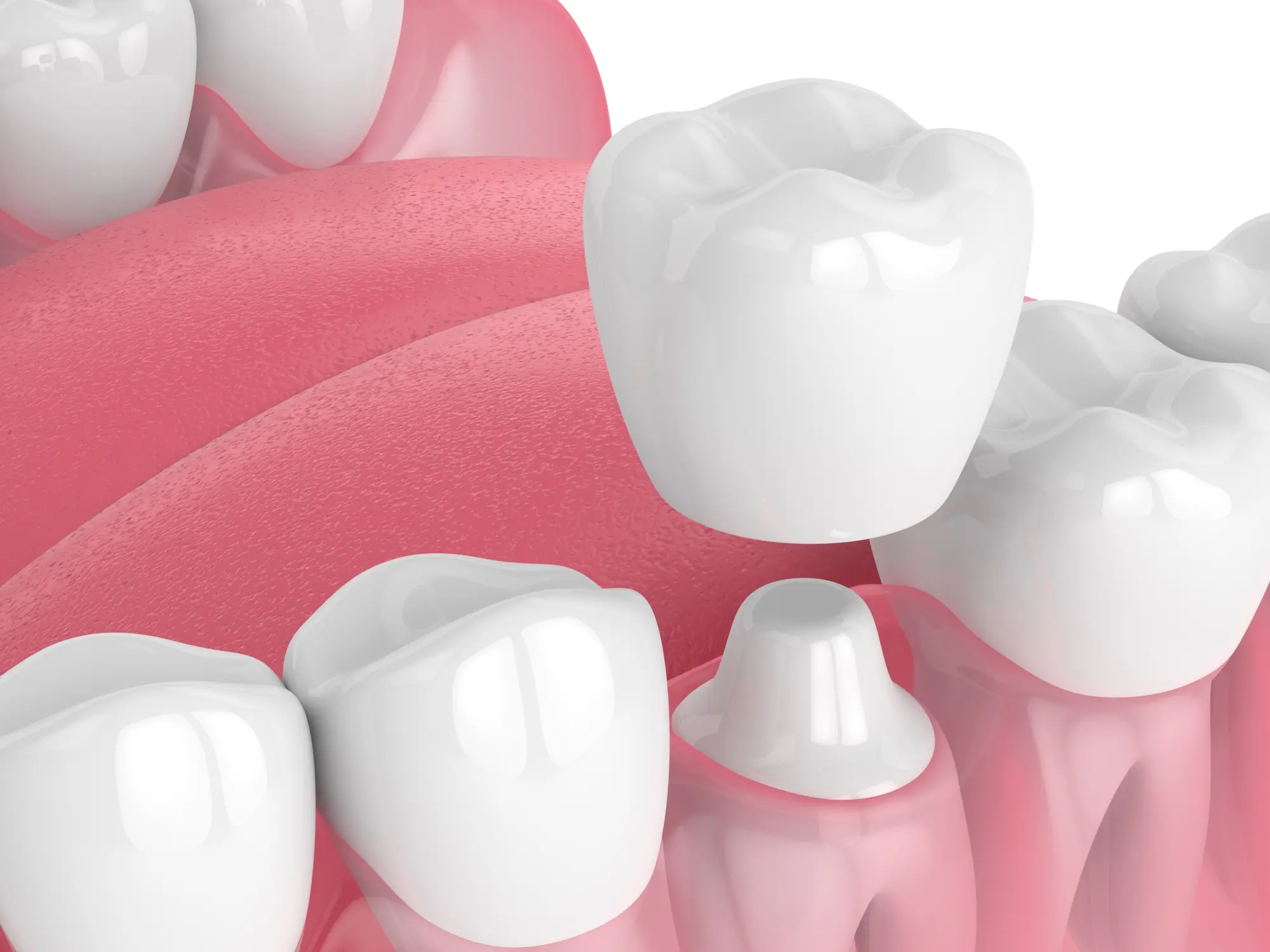
Why Do Children Need Crowns on Baby Teeth?
There are several reasons why dental crowns may be recommended for your child. Baby teeth, though temporary, have thinner enamel than adult teeth, making them more prone to decay. Left untreated, cavities can grow and lead to pain, infections, or even premature tooth loss.
Crowns offer a durable and long-lasting solution to protect weakened teeth. Here’s are a few situations where your child might need a crown on a baby tooth:
- Large cavities that cannot be repaired with a filling alone
- Damage from trauma, like a chipped or broken tooth
- To protect a tooth that has undergone a pulpotomy (baby root canal)
- Cosmetic purposes, if a visibly damaged tooth makes your child feel self-conscious
By preserving baby teeth, crowns help maintain proper space in the mouth, guiding adult teeth into position and reducing the risk of alignment issues later.
Do Dental Crowns on Baby Teeth Come Out on Their Own?
This is a common question among parents, and the simple answer is “yes!” When it’s time for the tooth to come out, crowns on baby teeth will fall out naturally along with the underlying baby tooth. Crowns are designed to fit snugly over the tooth and remain in place, serving their protective purpose until the baby tooth is replaced by an adult tooth.
However, in rare cases, if the crown becomes loose or falls off prematurely, it’s important to reach out to a trusted pediatric dentist, like Dr. Ying An at Sunflower Pediatric Dentistry. In most instances, the crown can be replaced or adjusted with little discomfort for your child.
What Should You Expect During the Process?
The process of placing a dental crown on your child’s baby tooth is a simple and safe procedure. Here’s how it typically unfolds:
- An evaluation is done to assess your child’s tooth and recommend the best treatment option.
- The tooth is gently prepared so that the crown can fit securely in place.
- The crown, notably stainless steel or tooth-colored options, will be selected and custom-fitted.
- With comfort as a top priority, the crown is placed, restoring the tooth’s shape, strength, and function.
Our team understands that dental visits can feel stressful for kids. That’s why we prioritize a warm, welcoming, and child-friendly environment, putting both your little one and you at ease.
Tips for Keeping Your Child’s Crown in Place
Caring for a dental crown on a baby tooth is simple. Here are some tips to ensure it stays secure and functioning as intended until the tooth naturally falls out:
- Encourage proper brushing and flossing habits (help younger children as needed).
- Limit sugary snacks and drinks to prevent further decay around the crowned tooth.
- Schedule regular pediatric dental visits to monitor the crown and overall oral health.
- Avoid sticky or hard foods that might pull at the crown or cause damage.
By instilling good oral hygiene habits, you’re setting the foundation for a lifetime of healthy smiles.
Why Choose Sunflower Pediatric Dentistry for Your Child’s Care?
At Sunflower Pediatric Dentistry, we are proud to be the first and only pediatric dental practice in Geauga County. We understand the unique needs of our local families, including our rural and Amish communities, and strive to provide culturally aware, judgment-free care.
Our mission extends beyond the dental chair, as we give back to the community by donating to the DDC Clinic with every new patient, helping children with special needs get the care they deserve.
We also believe in reducing barriers to treatment with affordable options like our “Sunflower Smile Membership” and a $180 new patient special, ensuring access to high-quality dental care for all families, especially those who are uninsured.
Have More Questions About Dental Crowns? We’re Here to Help!
If you have concerns about your child’s dental health or want to learn more about dental crowns on baby teeth, don’t hesitate to reach out to Sunflower Pediatric Dentistry. Our team, led by Dr. Ying An, is here to answer your questions, ease your worries, and deliver expert dental care with compassion and expertise.
Call us today at (440) 273-8104 to schedule an appointment, or visit our warm and welcoming office in Burton, OH. With Sunflower Pediatric Dentistry, you can rest easy knowing your child’s smile is in safe and loving hands. Book your visit today!